Section 01
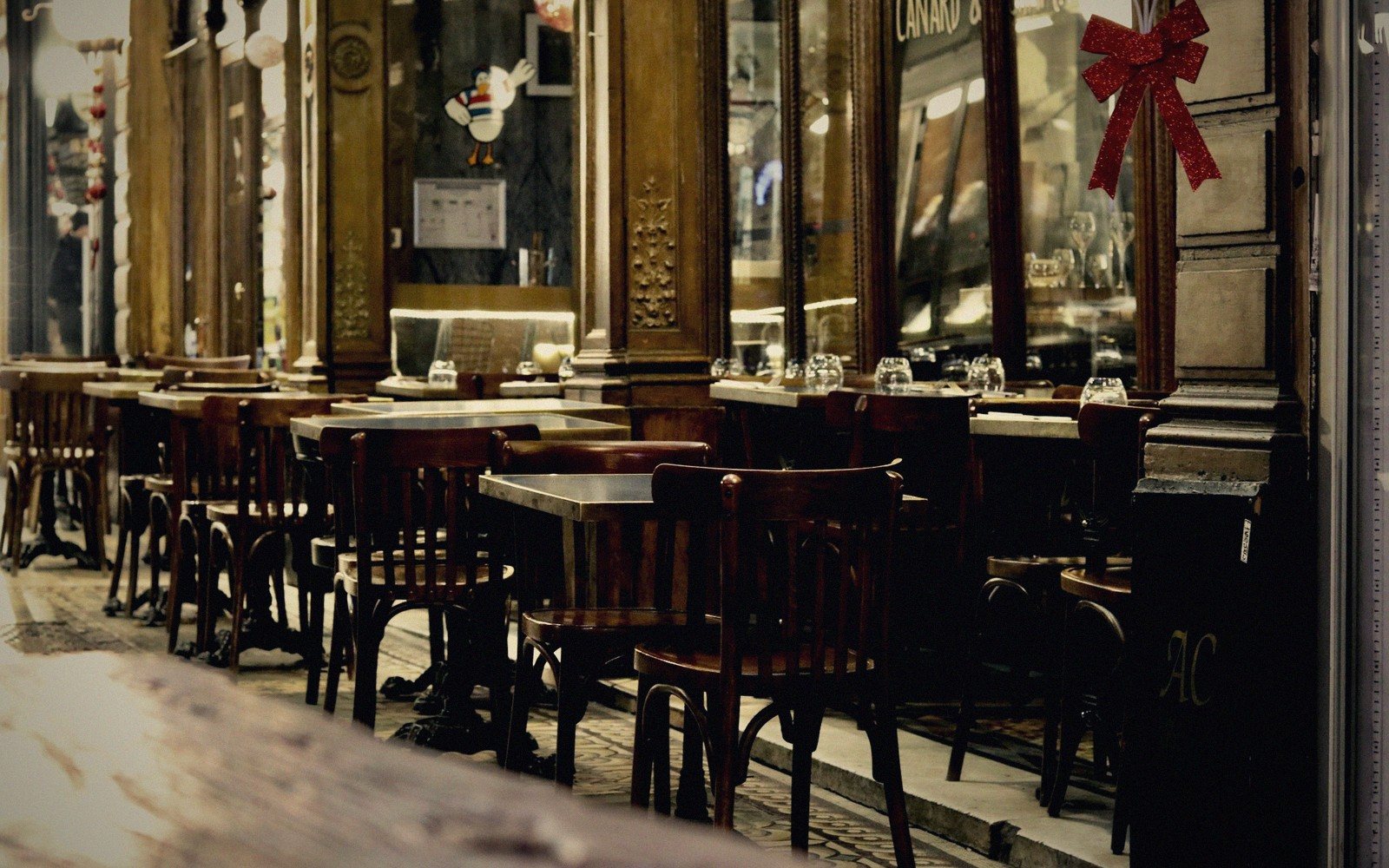
Before the literary world had a capital, it built one — around three or four café tables between Carrefour Vavin and the boulevard.
Section 02The City Behind the City
Paris has always been a place writers come to become themselves. But for a concentrated stretch of the twentieth century — roughly from the end of the First World War to the beginning of the Second — one particular quarter of the Rive Gauche became something more specific than a backdrop. Montparnasse was a working address, a postal district for the literary imagination. The cafés on the boulevard du Montparnasse were not merely where writers drank; they were where they wrote, waited for money, received letters, held court, fell apart and occasionally produced the work that defined an era.
It happened partly by accident and partly by gravity. The quarter was cheap. The studios were cheap. The franc was weak against the dollar and the pound, which made Paris hospitable to the broke and the ambitious in equal measure. The cafés kept tables all day without requiring orders, supplied heat in winter and tolerated typewriter ribbon stains and long afternoons on a single coffee. Landlords and café owners, for their part, had learned that writers brought other writers. A community, once seeded, accelerated itself.
Paris has always been a place writers come to become themselves.
Section 03The Tables They Held
Ernest Hemingway arrived in Paris in the early 1920s as a wire-service journalist and left it as something rather different. He worked in a rented room above a bal musette near the rue Cardinal-Lemoine, but he moved through Montparnasse with the purposeful ease of a man who understood that cafés were offices. La Closerie des Lilas, tucked at the quieter end of the boulevard, suited him precisely because it was less fashionable than the grand terraces at Carrefour Vavin — quieter, better lit, farther from the noise of people performing bohemianism. He could sit there for hours. The work he produced during those years — spare, stripped, absolutely certain of its own rhythm — bore the marks of a sensibility that was being forged in near-poverty in a borrowed city.
The terraces at the carrefour itself were another matter. La Coupole, Le Dôme, La Rotonde were not quiet. They were venues for the spectacle of literary life: for argument, for reunion, for the kind of intense, combustible conversation that substitutes for sleep when you are young and certain that everything is at stake. F. Scott Fitzgerald passed through. Ezra Pound, who had made himself a one-man institution, held opinions at volume. The painter Amedeo Modigliani, who lived and died in the quarter, was as much a fixture of those terraces as any writer — his presence a reminder that Montparnasse was never only literary. It was the address of a whole generation of displaced makers, whatever their medium.
Samuel Beckett came later, and stayed. An Irishman who had been drawn to Paris first in the late 1920s and who returned for good after the war, Beckett made the Left Bank his permanent home and eventually wrote in French by choice — a radical act of self-reinvention that turned a second language into a precision instrument. He lived modestly, on the margins of the quarter, and the geographical fact of exile shaped everything: the voices in his work have nowhere to return to, no comfortable address, no cure. Montparnasse suited him because it was still, in the postwar years, a place apart — identifiably itself, slightly separate from the literary establishment that was reorganising itself around Saint-Germain-des-Prés a short walk to the north.
That reorganisation mattered. Jean-Paul Sartre and Simone de Beauvoir had shifted the centre of philosophical and literary gravity toward the Café de Flore and Les Deux Magots in Saint-Germain, and the press followed. But Montparnasse never quite surrendered its identity. It had a longer memory — it had been doing this since before the war, since before the existentialists were schoolchildren — and something of that stubborn persistence remained in the quarter's atmosphere. The cafés kept their character. The streets kept their proportions. The writers who chose Montparnasse in the postwar decades often chose it precisely because it was not Saint-Germain: quieter, less curated, marginally less glamorous and therefore more usable.
- early 1920sHemingway arrives in Paris; Montparnasse literary community at its most concentrated
- late 1920sBeckett's first Paris period; Brâncuși working in his Montparnasse studio
- post-WWIILiterary gravity shifts toward Saint-Germain; Beckett settles permanently on the Left Bank
- interwar periodSchool of Paris and the great era of Montparnasse as international creative address
Section 04Exile and the Enabling City
What made Montparnasse particularly fertile as a literary environment was not just the cafés or the cost of living. It was the concentration of foreigners, all of whom were free — by displacement — to reinvent themselves. American writers after the First World War came to Paris because it was not the United States, and found in that distance a creative liberty they had not expected. To be outside your own language, your own social codes, your own expectations, is uncomfortable in exactly the right way for a writer. The familiar is estranging; the foreign becomes, strangely, enabling.
The great exiles of the earlier Montparnasse — the painters of what became known as the School of Paris, the Romanian sculptor Constantin Brâncuși working in his studio near the Impasse Ronsin, the sculptor Antoine Bourdelle in his atelier on the rue Antoine Bourdelle where the Musée Bourdelle now preserves his working world — all operated within this same enabling logic. The work they made was not the work they would have made at home. Paris, and Montparnasse specifically, made different things possible. Writers and artists arrived carrying the weight of wherever they had come from and found, in the relative anonymity of the quarter, the freedom to do something new with that weight.
The literary exiles wrote about Paris, certainly — Hemingway's memoir of the city is one of the most famous love letters in the language — but they also wrote about everywhere else. Distance gave them the vantage point. A writer working in a cold room above the rue Delambre, looking out at a narrow Montparnasse street, could write with great clarity about the Michigan woods or the Dublin quays or the plains of wherever they had left behind. Exile did not separate them from their subject matter. It focused them.
Section 05The Quarter as Character
Montparnasse had, and still has, a physical quality that literary culture shaped and then inhabited. The streets south of the boulevard are quieter, more residential, less trafficked by tourists than the Marais or the banks of the Seine. The Cimetière du Montparnasse — where Baudelaire's cenotaph stands, where Sartre and Beauvoir lie side by side, where Brâncuși's headstone marks a plot in the eastern section — is a working cemetery in a residential neighbourhood, visited but not overrun. The studio-museums that survive here are small, personal and profoundly atmospheric: the Musée Zadkine in its hidden garden off the rue d'Assas, Bourdelle's plaster-thick atelier. These are not the monuments of a culture that has tidied itself away. They are the actual rooms.
The cafés on the boulevard du Montparnasse are still there. The terraces at Carrefour Vavin still fill on warm evenings. La Coupole still functions in something close to its original Art Deco interior. These are real places, not museums to themselves, and they still attract the kind of people who come to Paris to work on something. The writers of the interwar years chose this quarter for practical reasons — warmth, cheap coffee, tolerance — and those practical reasons have a way of persisting as atmosphere even when the original conditions have long since changed.
What those writers left behind is not just the work — though the work is extraordinary — but a model of what a literary quarter can be. Not a heritage site, not a theme, but a place where the conditions for serious, difficult, necessary writing happened to converge. The light is still the same light. The boulevard still runs in the same direction. The tables are still there.
Who & wherePeople & Places
Ernest Hemingway
American novelist; key figure of 1920s Montparnasse literary scene
Samuel Beckett
Irish playwright and novelist; permanent Left Bank resident from post-WWII
Jean-Paul Sartre
French philosopher and writer; associated with postwar Saint-Germain-des-Prés
Simone de Beauvoir
French philosopher and novelist; partner of Sartre, Saint-Germain habitué
Amedeo Modigliani
Italian painter; Montparnasse resident and café regular
Constantin Brâncuși
Romanian sculptor; worked in a Montparnasse studio for decades