Section 01
Before there were galleries or publishers or manifestos, there were tables — and the question of who was sitting at them.
Section 02The Accident of Cheap Rent
Montparnasse did not set out to become the centre of the art world. In the years before the First World War, artists arrived for the same reason people always arrive somewhere: it was affordable. The studios around the boulevard du Montparnasse and the streets feeding off it asked little in rent and less in respectability. Amedeo Modigliani came. Constantin Brâncuși came. Antoine Bourdelle was already there, working in a studio that still stands as the Musée Bourdelle. They were followed, in the years after the war, by writers — among them Ernest Hemingway, who would later describe the whole arrangement with the precision of a man who had needed cheap meals as badly as he needed a table to write at.
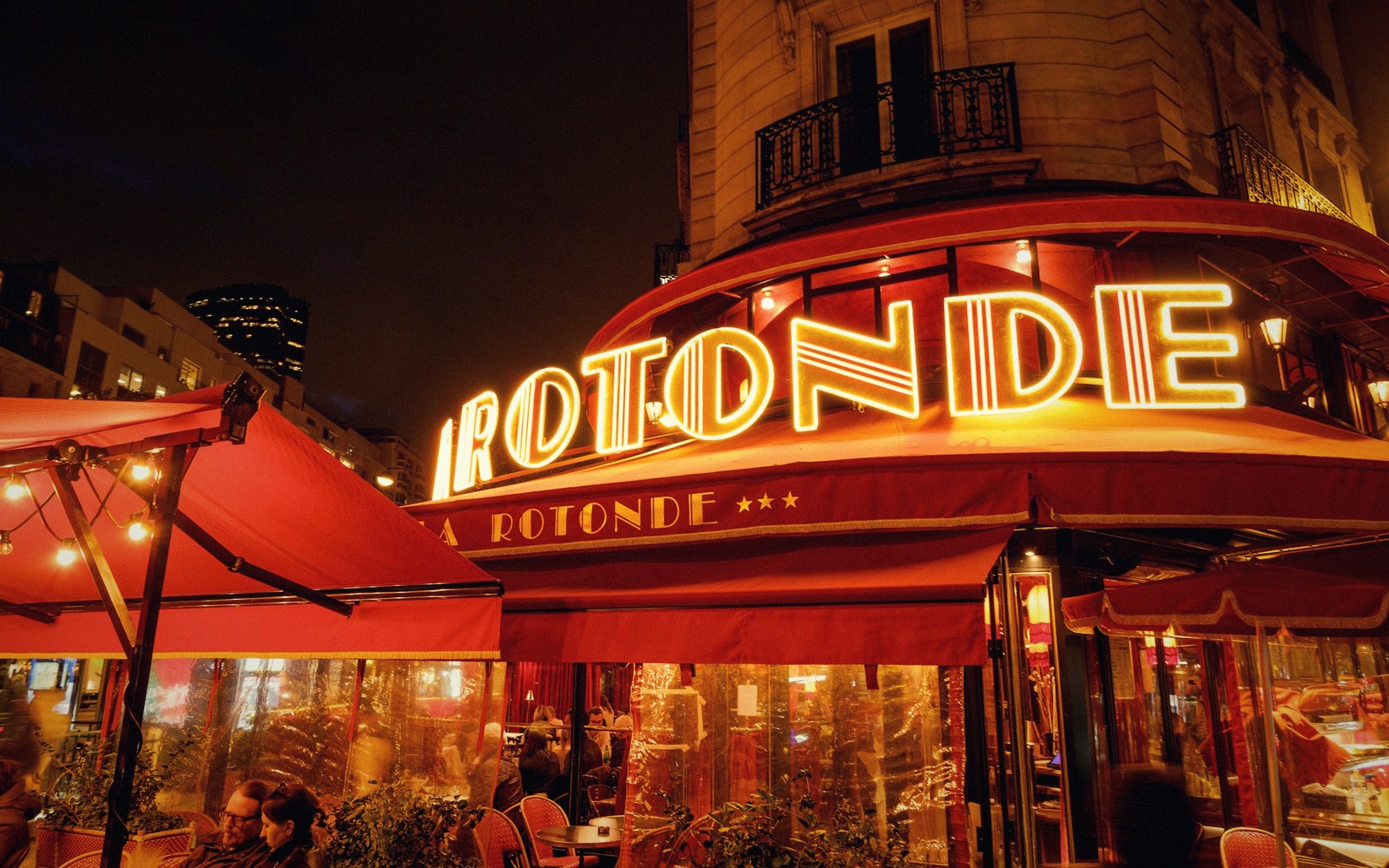
What drew them to the cafés specifically was practical before it was romantic. A café in 1920 offered warmth, light, paper, and an address. You could receive messages at La Rotonde or Le Dôme; a letter sent to Carrefour Vavin, care of a terrace waiter, would find you. For artists without fixed studios and writers between lodgings, the café was less a place of leisure than a piece of infrastructure.
Montparnasse did not set out to become the centre of the art world.
Section 03The Three Tables That Made a World
The grand brasseries at the Carrefour Vavin — La Coupole, Le Dôme, La Rotonde — operated almost as competing factions. Painters and sculptors from Eastern Europe clustered at La Rotonde under the proprietor Libion, who was known to extend credit against the value of a canvas. The Dôme drew Americans and the press. La Coupole, which opened in 1927 with its signature painted pillars, arrived late enough to absorb everyone.
What the cafés created, almost by accident, was a commons — a shared room without an institution behind it, where a Romanian sculptor might argue aesthetics with a Spanish painter and a St. Louis–born poet between the first coffee and the last drink. Jean-Paul Sartre and Simone de Beauvoir, working at their corner tables through the next generation, were in a direct line with that tradition: the café as workplace, as salon, as the one space in Paris where a serious mind could be penniless and still feel entirely at home.
The work — the paintings, the novels, the bronze — was made elsewhere, in cold studios and rented rooms. But it was argued into existence here, across the marble and the wicker, under the boulevard's particular light.
- Pre-1914artists arrive in Montparnasse, drawn by affordable studios
- 1920spostwar influx of international writers and painters; café culture at its peak
- 1927La Coupole opens, consolidating the quarter's brasserie triangle
- 1930s–1940sSartre and de Beauvoir continue the tradition of the café as workspace
Who & wherePeople & Places
Amedeo Modigliani
Italian painter and sculptor, key figure in the School of Paris
Constantin Brâncuși
Romanian sculptor, lived and worked in Montparnasse
Antoine Bourdelle
French sculptor whose studio survives as the Musée Bourdelle
Ernest Hemingway
American writer, central to 1920s Montparnasse literary life
Jean-Paul Sartre
French philosopher and writer, associated with Left Bank café culture
Simone de Beauvoir
French writer and philosopher, Sartre's companion and intellectual peer