Section 01
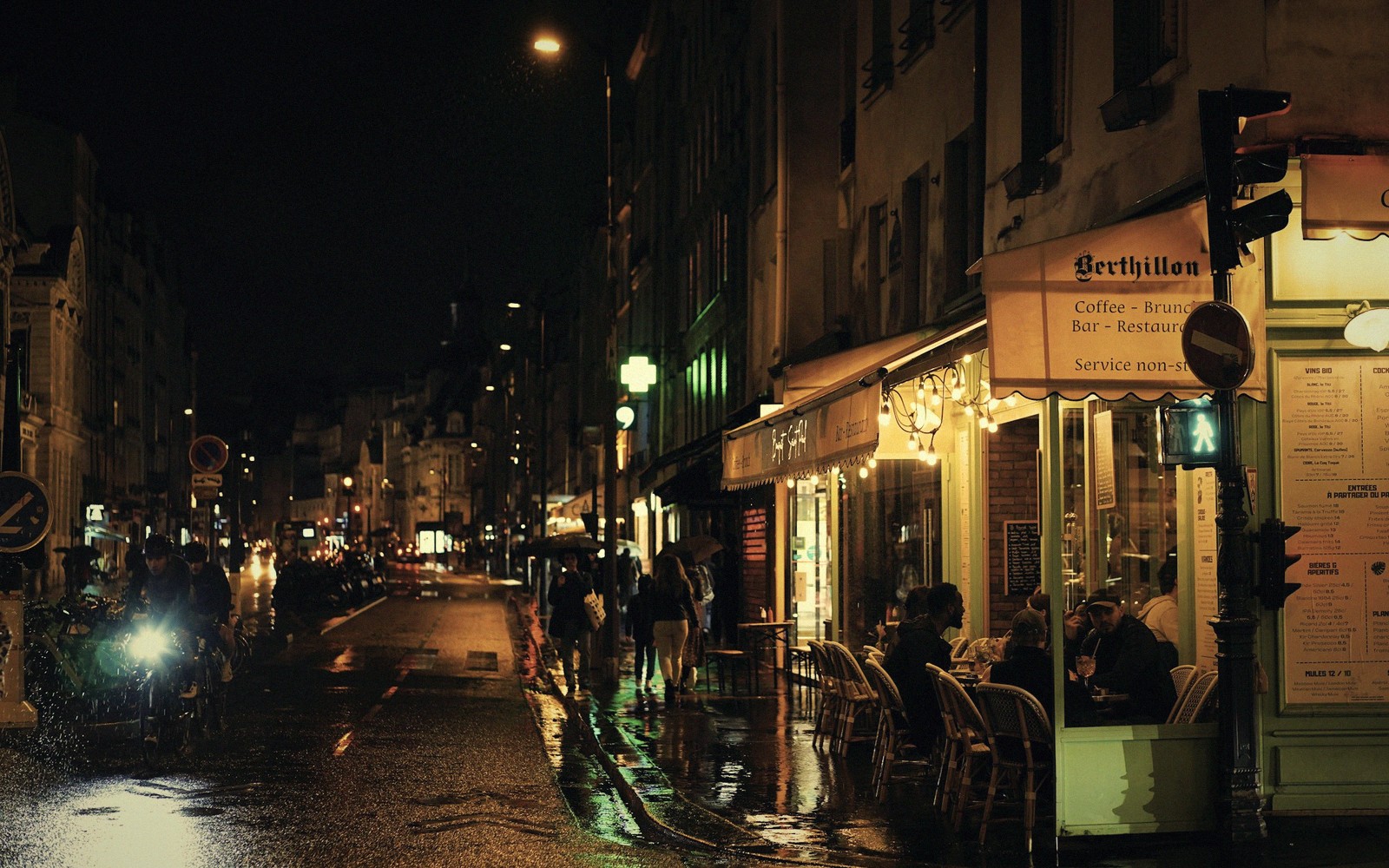
Cross the boulevard and the city changes register — the postwar jazz clubs still keep the small hours here.
Section 02The Other Side of the Night
Montparnasse holds you with its grand brasseries and terrace lights, but there comes a point in any good evening on the Rive Gauche when the instinct is to walk. Head north from Carrefour Vavin, past the Jardin du Luxembourg and through the narrow streets that tilt you gently toward the Seine, and you find yourself in Saint-Germain-des-Prés — a different quarter with a different tempo, and one that earns a late visit precisely because it deepens after dark.
The two neighbourhoods are often spoken of together, as though the whole Left Bank were a single mood. It isn't. Montparnasse is broad and cinematic, built for spectacle; Saint-Germain is compressed, intimate, a place where streets narrow and conversations lower their voices. The famous cafés — Les Deux Magots, Café de Flore — still anchor the main square, polished and a little self-conscious in the way of places that know their own history too well. You go, you sit, you order a Calvados or a glass of Sancerre, and you understand why Jean-Paul Sartre and Simone de Beauvoir spent whole winters here. Then you move on, because the more interesting rooms are just off the main drag.
The two neighbourhoods are often spoken of together, as though the whole Left Bank were a single mood.
Section 03Underground, Still
The jazz beneath Saint-Germain is not a metaphor. In the years just after the Liberation, the caves — stone cellars that had served other purposes during the Occupation — became the most vital music rooms in Europe. American musicians who found Paris more welcoming than home crossed the Atlantic and descended those stairs. The music they brought collided with what was already fermenting in the city, and something was made that belonged entirely to those particular rooms, that particular dark. The best-known addresses — the Caveau de la Huchette on the rue de la Huchette, the Club Saint-Germain that no longer exists in its original form — are fixed in the city's memory like addresses in a novel.
Caveau de la Huchette survives. It is not nostalgic in the museum sense; it is simply old and still working, with dancers on a tiny floor, a sweating ceiling and music that comes at you with genuine force. The Latin Quarter presses in on all sides — it sits just east of Saint-Germain, across the boulevard Saint-Michel — and the rue de la Huchette is one of those streets where the medieval street plan and the postwar century coexist in unexplained harmony. Arrive late rather than early: the room finds itself after midnight.
Section 04What to Order, Where to Sit
The bars of Saint-Germain reward a certain patience. The wine lists tend toward Burgundy and the Loire — this is not a quartier for cocktails, or not primarily. A glass of something white and mineral, a Muscadet or a Chablis premier cru, suits the stone and the hour. There are still zinc counters on side streets where the locals drink standing, which is the correct posture for a quarter-past-midnight in a city that has been doing this for three centuries.
The café terraces along the boulevard Saint-Germain stay lit late, and sitting outside at the right hour — after the tourists have retreated, when the chairs begin to empty and the waiters stop hurrying — is one of the Left Bank's more reliable pleasures. The church of Saint-Germain-des-Prés, Romanesque and slightly severe, keeps its floodlights burning, and there is something quietly strange about drinking beside a building that has been standing since the eleventh century while jazz drifts out of a basement thirty metres away.
This is what Saint-Germain offers that Montparnasse doesn't quite replicate: compression. History pressed together in a few city blocks, a density of layers — medieval, existentialist, bebop, twenty-first century — that you feel in the air more than read in any guide. The walk from Vavin takes twenty minutes. At two in the morning, it is worth every one of them.
Who & wherePeople & Places
Jean-Paul Sartre
existentialist philosopher, habitué of Café de Flore and Les Deux Magots
Simone de Beauvoir
philosopher and writer, inseparable from Saint-Germain's postwar intellectual life
Caveau de la Huchette
surviving jazz cave on the rue de la Huchette, in continuous operation since the postwar era
Café de Flore / Les Deux Magots
the twin literary cafés anchoring the place Saint-Germain-des-Prés
Saint-Germain-des-Prés church
Romanesque church, one of the oldest in Paris, dating to the eleventh century