Section 01Where the Quarter Does Its Shopping
The grand brasseries get the headlines, but the real texture of Montparnasse lives a few streets south, in the markets and pedestrian lanes that the quarter uses to feed itself.
Rue Daguerre is where to start. Running south from the Denfert-Rochereau junction, this narrow pedestrian street is one of the most genuinely local market streets in Paris — a working food rue of butchers, cheesemongers, bakers and greengrocers whose stalls spill onto the pavement most mornings. Vendors know their regulars; the pace is unhurried. Nothing here is staged for visitors, which is precisely the point. The street was already well-established by the late nineteenth century, and it retains that same workaday integrity — the smell of roasting chicken, a queue at the fromagerie, a florist arranging dahlias on the kerb. Walking it before noon on any day of the week offers a quieter, more honest introduction to the quarter than the boulevard ever will.
The boulevard Edgar-Quinet market, running along the central reservation of the boulevard of the same name, takes a different character. It operates on Wednesday and Saturday mornings, spreading across a long tree-lined island between the lanes of traffic, close to the entrance of the Cimetière du Montparnasse. Stalls here cover the usual French market range — vegetables, charcuterie, olives, cut flowers, cheese — alongside a handful of secondhand and craft tables. The proximity of the cemetery gives the boulevard an unusual atmosphere at this hour: shopping baskets and flower sellers just metres from the cemetery wall, the living going about their morning beside one of the quarter's most celebrated addresses.
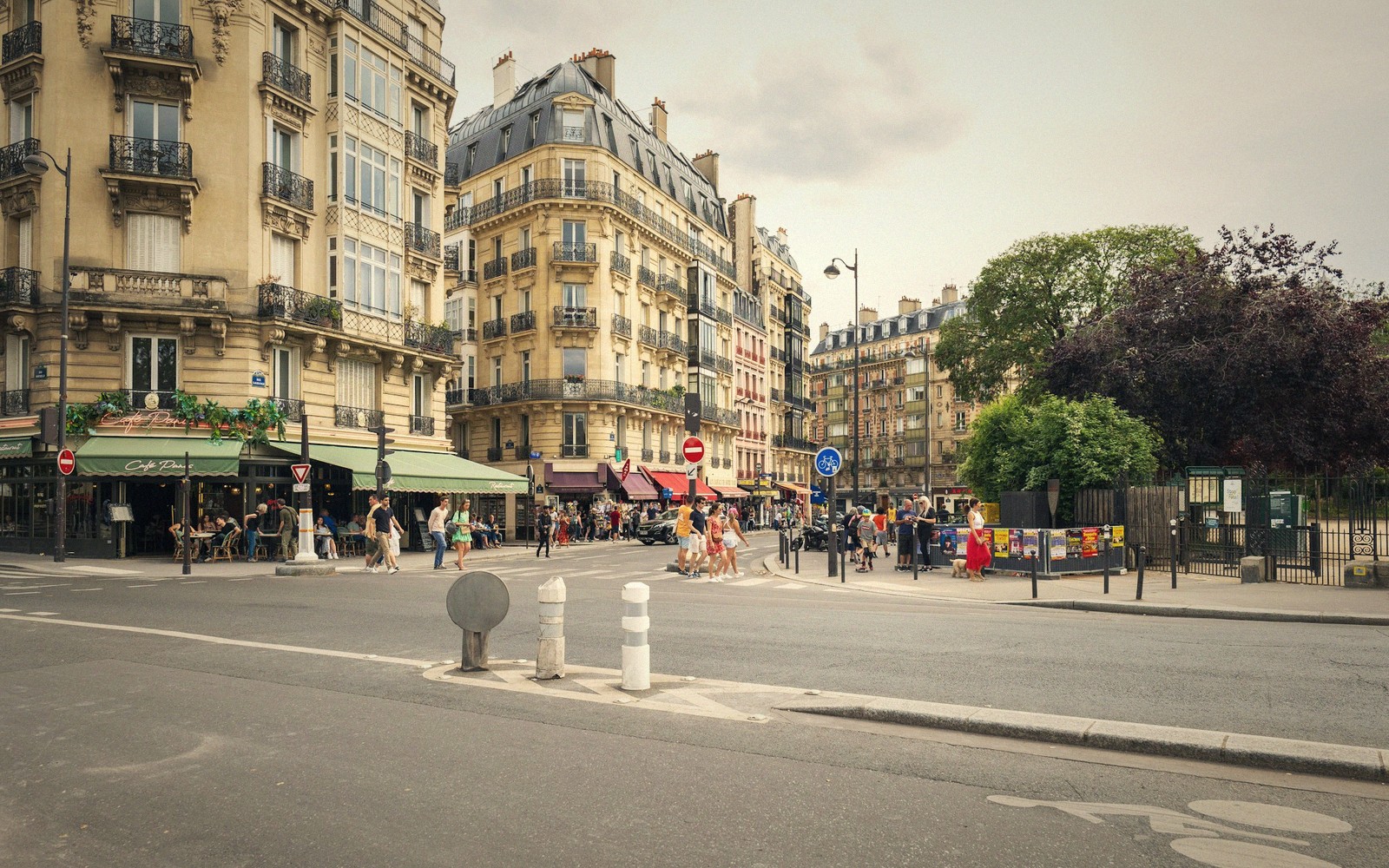
Beyond the markets, certain streets reward slow walking simply for what they are. The rue de la Gaîté, running just south of the boulevard du Montparnasse, has a pleasingly raffish personality — theatres, crêperies and an old-fashioned café or two, with the Théâtre Montparnasse anchoring its eastern end. It is a street that still knows how to be louche without trying. Nearby, the streets around the Carrefour Vavin retain their historical charge: this is the intersection where La Rotonde and Le Dôme face each other across the boulevard, where the terraces that once seated Hemingway and Modigliani still fill on warm evenings, and where the grand brasseries of the quarter remain very much in business.
The pleasure of Montparnasse at street level is that these scales coexist without friction. A morning market, a sculptor's studio, a century-old café — the quarter layers them without ceremony, leaving you to find the connections on foot.
Who & wherePeople & Places
Rue Daguerre
pedestrian market street south of Denfert-Rochereau, one of Paris's most authentic food streets
Boulevard Edgar-Quinet
boulevard with a Wednesday and Saturday open-air market near the cemetery
Carrefour Vavin
historic intersection at the heart of Montparnasse, La Rotonde and Le Dôme face each other here
Rue de la Gaîté
lively street of theatres and cafés running parallel to the boulevard du Montparnasse
Théâtre Montparnasse
historic theatre anchoring the eastern end of the rue de la Gaîté
Cimetière du Montparnasse
major cemetery adjacent to the Edgar-Quinet market boulevard